A gentle journey through nature's most beautiful creations: their stories, origins, and the little wonders they hide.
Built entirely with Qwen 3.8 27B, running locally on a small Mac Mini. No cloud, no larger models.
Start ExploringEach flower tells a story. Meet a few of our favorites.
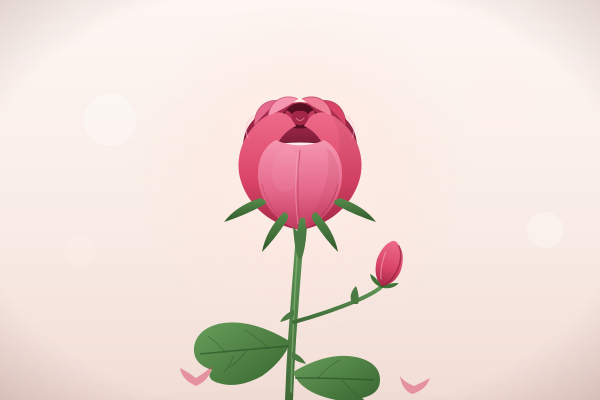
Rosa
The timeless symbol of love and beauty. With over 300 species and countless cultivated varieties, roses have captivated humanity for millennia.
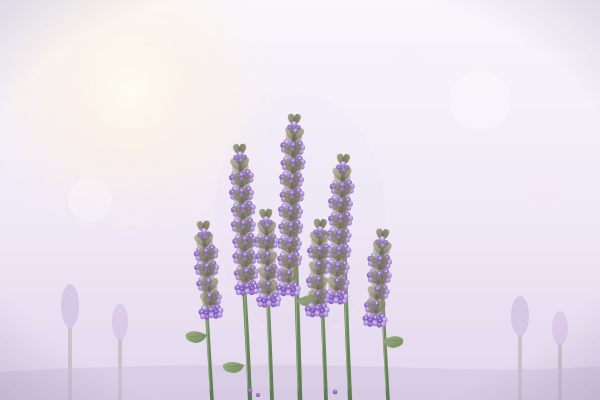
Lavandula
Famous for its calming scent and striking purple spikes. Lavender fields stretch across Provence, France, painting the landscape in waves of violet.
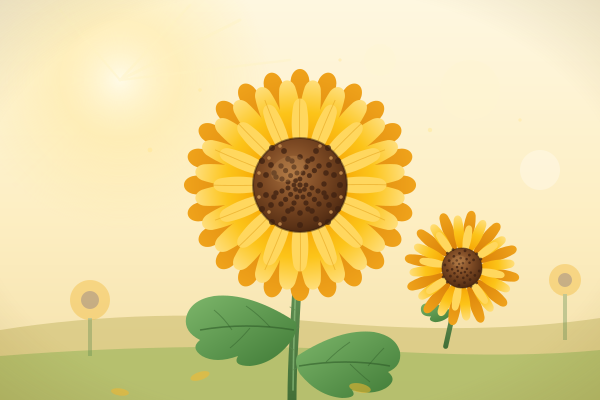
Helianthus annuus
Tall, cheerful, and impossibly optimistic. Sunflowers follow the sun across the sky, a behavior called heliotropism that young plants display with remarkable precision.
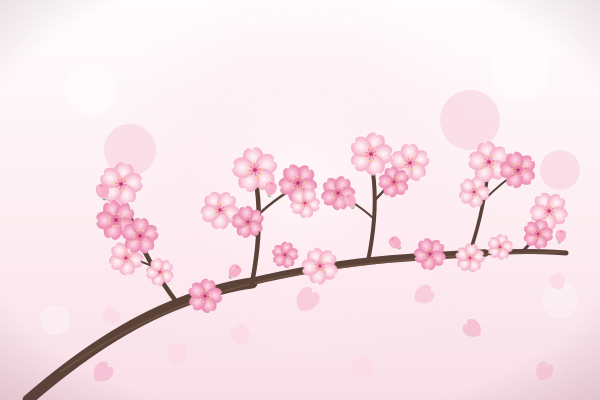
Prunus serrulata
In Japan, the fleeting pink blossoms inspire hanami, the ancient tradition of flower viewing. Their brief bloom reminds us to cherish the present moment.
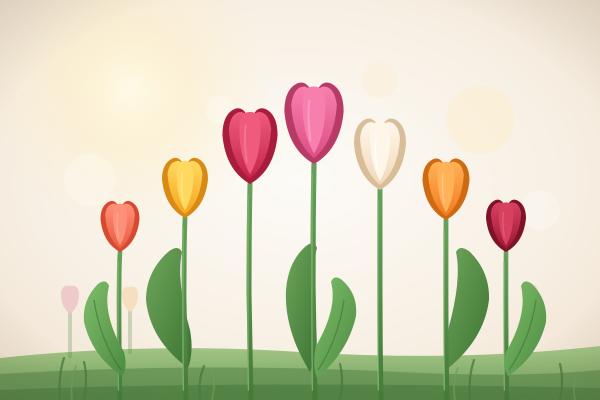
Tulipa
From humble Central Asian meadows to the grand terraces of the Netherlands, the tulip's journey is one of the most extraordinary in the floral world.
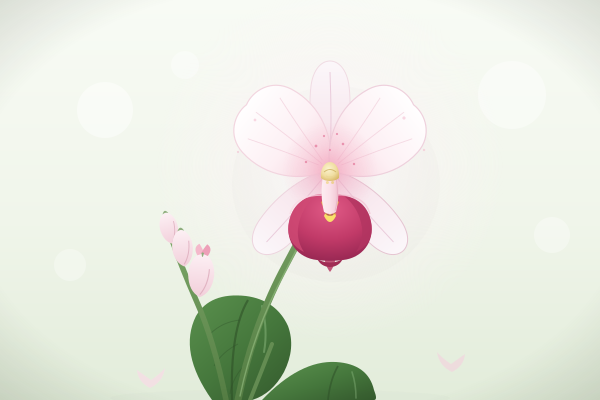
Orchidaceae
One of the largest and most diverse plant families on Earth, with over 28,000 species. Their intricate structures have puzzled and delighted botanists for centuries.
Flowers are the reproductive organs of angiosperms, the dominant plant group on our planet. They evolved roughly 130 million years ago and have since shaped ecosystems, economies, cultures, and art across every continent. From the pollinators they attract to the medicines we derive from them, flowers are far more than decoration. They are engineers of the natural world, quietly sustaining the web of life.
A few surprising things about the world of flowers.
The Rafflesia arnoldii, found in Indonesian rainforests, can grow up to 1 meter in diameter and weigh around 11 kg. It smells like rotting meat to attract pollinators.
Some ginkgo trees have been around for over 200 million years. But flowering plants (angiosperms) appeared around 130 million years ago and exploded in diversity.
Many flowers evolved in perfect partnership with specific pollinators. The Madagascar cuckoo orchid has a spur 30 cm long; only a specific long-proboscis moth can reach the nectar inside.
Flower color comes from pigments like anthocyanins (reds, pinks, purples), carotenoids (yellows, oranges), and chlorophyll (greens). Some flowers change color as they age.
The Queen of the Night (Epiphyllum oxypetalum) unfurls just once a year, opening at dusk and wilting by dawn. Its large white flowers release a powerful fragrance to attract moth pollinators, and the entire bloom lasts less than 12 hours.
By weight, a wooden flower stem (like a bamboo culm) can have a strength-to-weight ratio that rivals steel. Nature's engineering in action.